The National Theater Company of Korea continues Roland Schimmelpfennig’s five-part 'Anthropolis,' a reimagining of the tragedies of Thebes that examines humanity, violence and society today
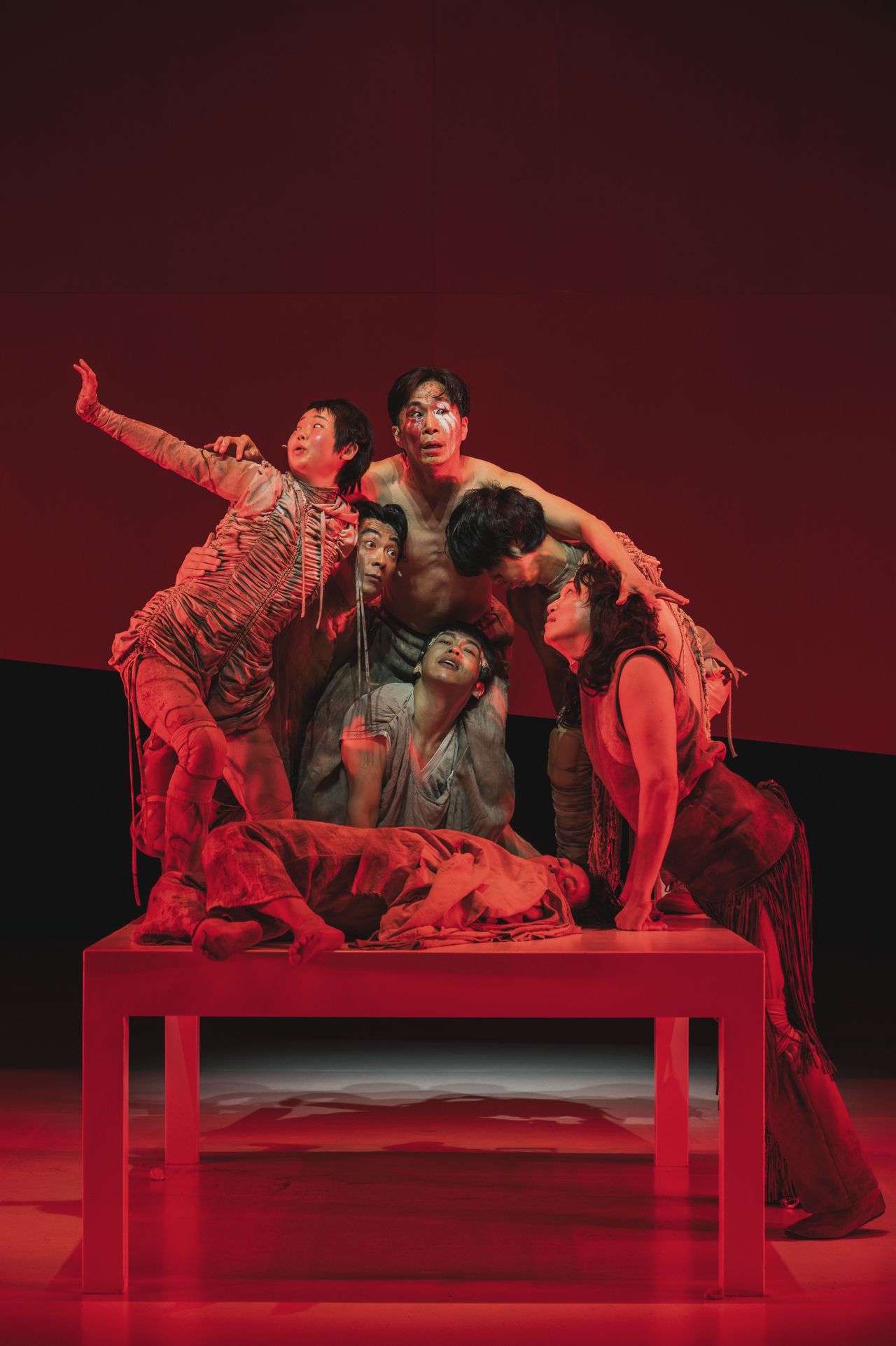
Classics and myths have a way of making us look at humanity and society across the ages.
The buzz surrounding Christopher Nolan’s "The Odyssey," his adaptation of Homer’s epic, is a reminder that stories of heroes from thousands of years ago can still speak to urgent questions about the world today — including the fractures left by war and the sustainability of civilization.
That is also why German playwright Roland Schimmelpfennig reimagined ancient Greek mythology in "Anthropolis" (2023), a five-part theater cycle. The title combines “Anthropozan,” the German word for the Anthropocene, the age of humans, and “polis,” the Greek word for city.
The National Theater Company of Korea has been staging the cycle in installments since last year, when it presented Parts 1 and 2, “Prolog/Dionysos” and "Laios." This year, it is presenting Parts 3, 4 and 5: “Oedipus,” “Iokaste” and “Antigone/Epilogue."
The pentalogy brings the tragedy of the ancient Greek city of Thebes to the stage while also turning its gaze toward human society today.
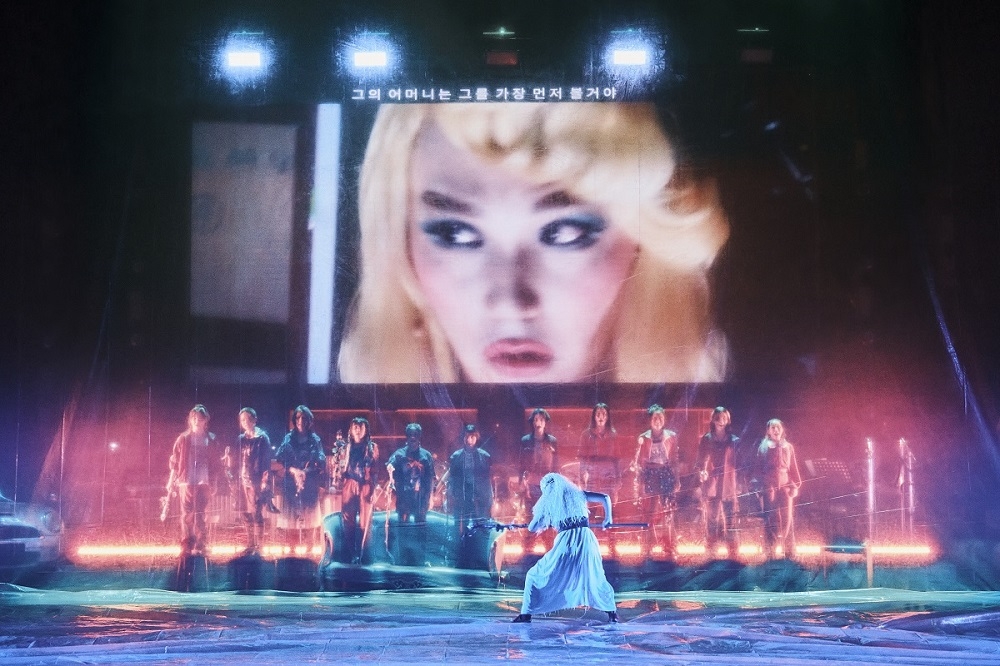
In a message released for the Korean production, Schimmelpfennig said, “The ancient stories are mirrors in which we can still recognize ourselves today: in our longings, in our fears, in our struggles for justice, in the never fully resolvable contradiction between society and individuality.”
He said, "Antiquity is not a closed chapter. It is a reservoir of stories that we can read and retell again and again — especially in a time when we are confronted with upheavals, uncertainties and crises."
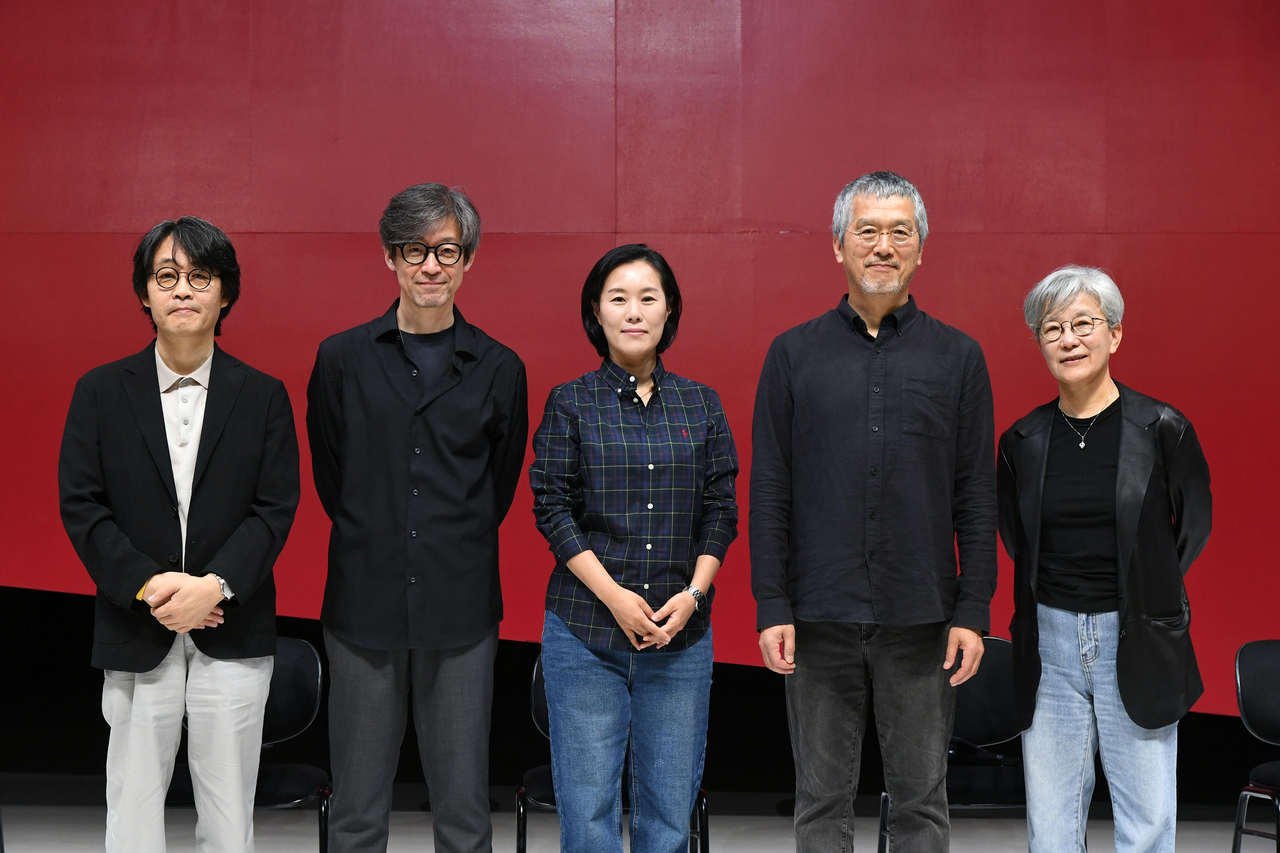
“(Theater) is an art that begins with questions about human beings, for human beings,” Park Jeong-hee, artistic director of the National Theater Company of Korea, said at a press conference Wednesday at Myeongdong Arts Theater in Seoul. “Through this cycle, we wanted to ask how human beings exist within their social and economic circumstances.”
“Classics and myths contain the roots of humanity, the roots of history and the roots of violence. They make us ask why we live the way we do today,” she said.
Oedipus, Iokaste and Antigone
For the directors of the three productions being staged this year, the central question comes back to the people of today.
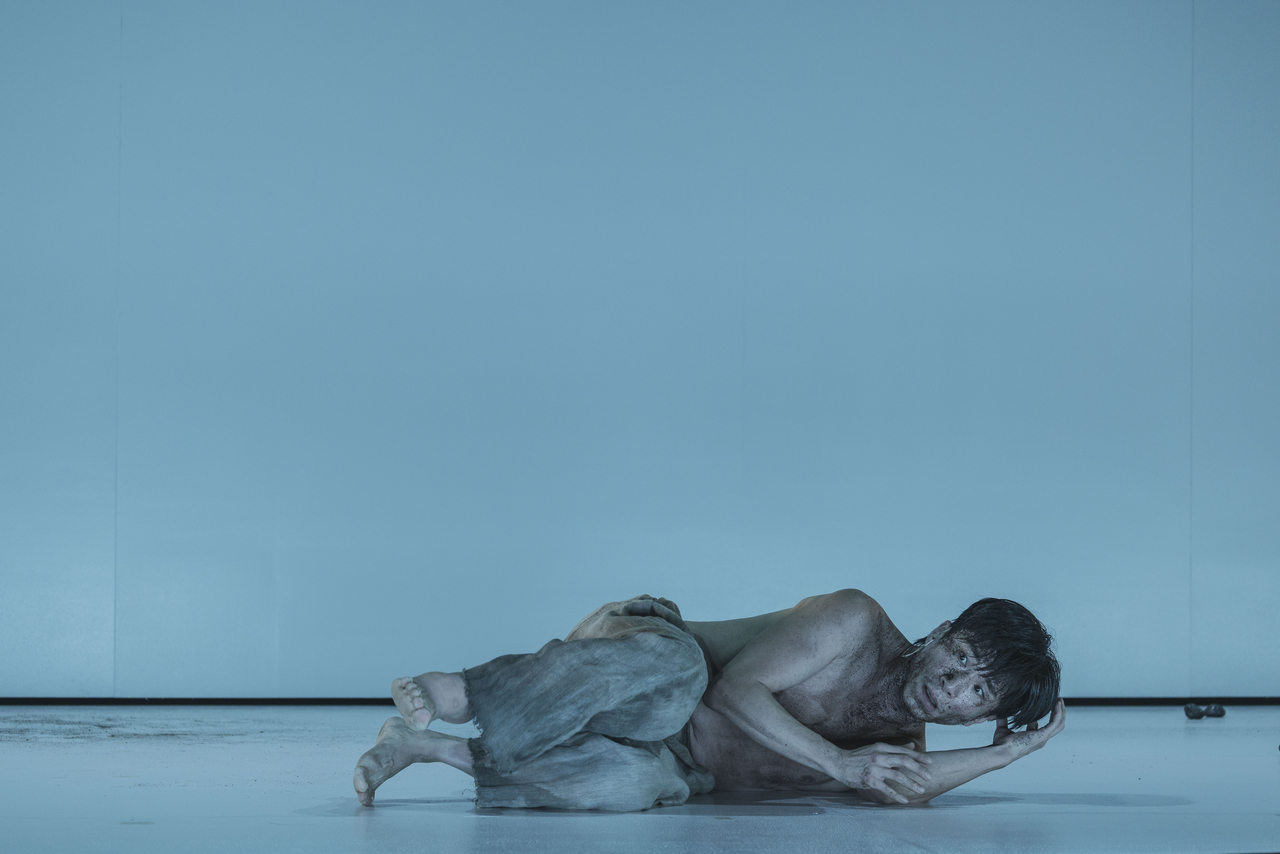
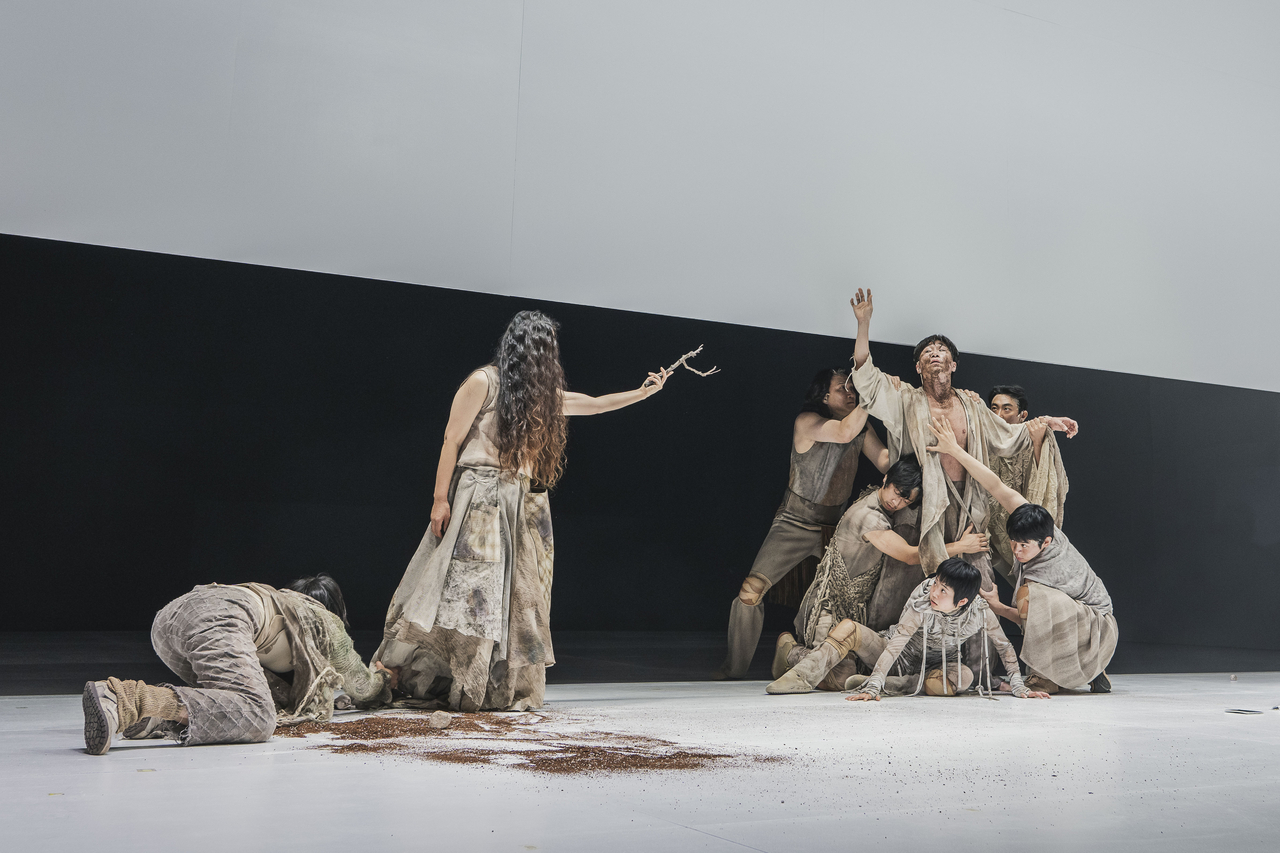
"Oedipus," which opened Sept. 24, turns on its head the central question in Sophocles’ "Oedipus Rex": Who can save a city from disaster?
“If the Greeks believed that a wise human could find a way out of disaster, we today have to ask whether that very way of thinking may have caused the disasters we face," said Kang Ryang-won, who directs Part 3.
The production, in turn, questions a world centered on humans. Plants, dogs, goats, eagles and other nonhuman beings appear as the chorus. Oedipus is presented not as a heroic figure, but as a disabled migrant who has endured prejudice and discrimination.
“It was important for me to tell the story from the perspective of those on the margins — nonhuman beings alienated by humans or pushed outside the boundaries of humanity,” Kang said.
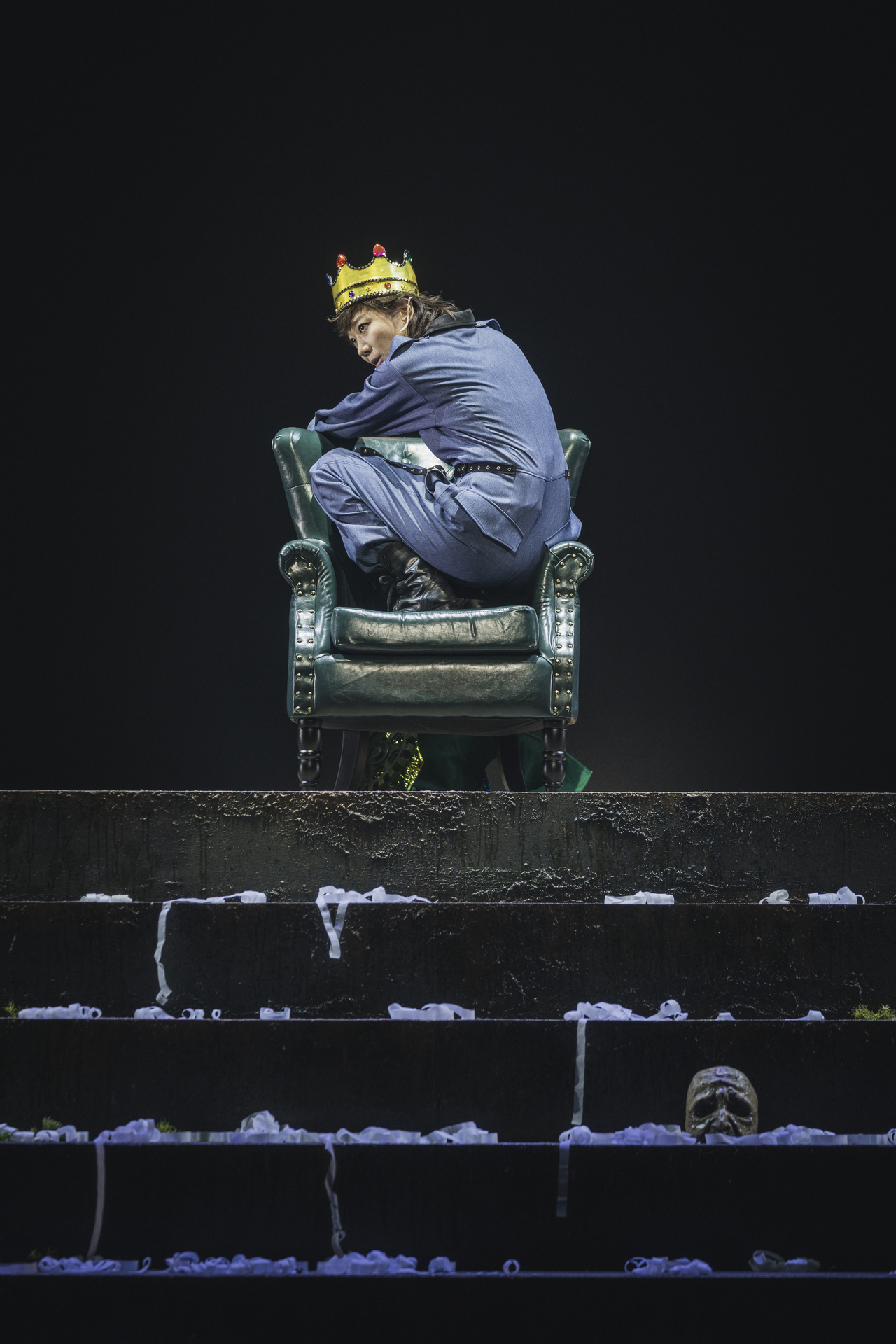
"Iokaste," opening Oct. 28, brings back Iokaste, Oedipus’ mother and wife, who exits Sophocles’ "Oedipus Rex" in death. In Sophocles’ play, her fate is described in a single line: “noble Jocasta, our queen, is dead.” In "Anthropolis," she returns as a political mediator trying to prevent a war between her two sons, Eteocles and Polynices.
Seo Ji-hye, who helms Part 4, sees Iokaste as “a questioner who gives humanity another chance and prompts us to rethink humanity, ethics and morality.”
“Through the five-part cycle, Schimmelpfennig warns that unless the paradigm of civilization built on blood and violence changes, tragedies will continue today,” Seo said.
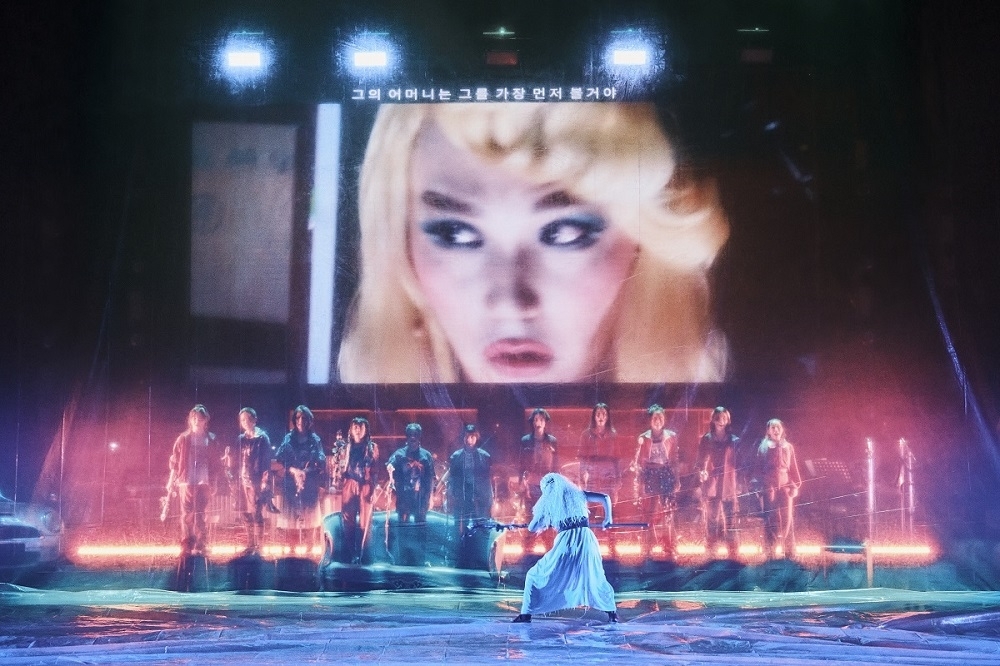
The final installment, "Antigone/Epilog," directed by Jung Young-doo and opening in December, asks what should guide us when beliefs collide.
“When my beliefs clash with someone else’s, where does the wisdom to resolve that conflict come from?” Jung said. “I’m exploring whether we can really draw such a clear line between right and wrong.”
English subtitles will be available for the series on Thursdays and Sundays. For "Oedipus," English subtitles will be provided on Thursdays and Sundays, except Oct. 4.
hwangdh@heraldcorp.com